Cannabinoids are natural compounds found in the cannabis plant, each offering unique effects and potential medical applications. Among the 140-plus cannabinoids identified by scientists, cannabidiol (CBD) and tetrahydrocannabinol (THC) are the most widely recognised. Because they originate from the same plant, many people assume they serve the same purpose.
Their effects on the human body, legal status, and medical applications are actually quite distinct. Both compounds offer significant therapeutic benefits, yet they interact with your biological systems in entirely different ways.
This guide breaks down the science behind CBD and THC, explaining how they work, their potential medical applications, and how to know which options might be suitable for your specific health needs.
How cannabinoids interact with your body
To understand the difference between CBD and THC, you first need to understand the endocannabinoid system (ECS). The ECS is a complex biological network within your body that helps regulate key physiological functions, including mood, pain sensation, appetite, and immune system responses.
The ECS has been described by researchers as “nature’s dimmer switch” because it modulates the release of various neurotransmitters. It relies on cannabinoid receptors, primarily divided into two categories:
- CB1 receptors: Located predominantly in the central nervous system, these receptors influence mood, memory, emotions, and motor coordination.
- CB2 receptors: Found mainly within the immune system, these receptors play a crucial role in managing inflammation and pain modulation.
Interestingly, THC and CBD share the exact same chemical formula. 21 carbon atoms, 30 hydrogen atoms, and 2 oxygen atoms. A subtle variation in how those atoms are arranged completely changes how each compound binds to your ECS receptors, leading to very different physiological outcomes.
What is CBD (Cannabidiol)?
Cannabidiol, or CBD, is a highly researched cannabinoid that does not produce a psychotropic “high.” Instead of binding directly to CB1 or CB2 receptors, CBD alters the ECS in indirect ways. Its primary action is inhibiting the breakdown of your body’s naturally occurring endocannabinoids (like anandamide), making them more available to your system. It also influences other critical signalling molecules responsible for regulating dopamine and serotonin.
Because of its excellent safety profile and lack of intoxicating effects, CBD is widely accessible. However, it is vital to distinguish between over-the-counter CBD wellness products and pharmaceutical-grade CBD. Wellness products found on high streets are not manufactured to pharmaceutical standards and are not intended to treat specific medical conditions. Medical-grade CBD is rigorously tested and prescribed by specialist doctors.
What is THC (Tetrahydrocannabinol)?
Tetrahydrocannabinol, or THC, is the cannabinoid responsible for the euphoria or “high” typically associated with recreational cannabis use. It achieves this by binding directly and strongly to the CB1 receptors in your central nervous system.
While its psychotropic effects are well-known, THC also possesses profound therapeutic properties. In a clinical setting, doctors aim to harness these medical benefits while minimising any unwanted euphoria. When prescribed medically, THC treatments usually begin at the lowest possible dose. This dose is then increased gradually, allowing patients to build a tolerance to the psychotropic effects while still receiving relief from their symptoms.
Comparing the therapeutic benefits
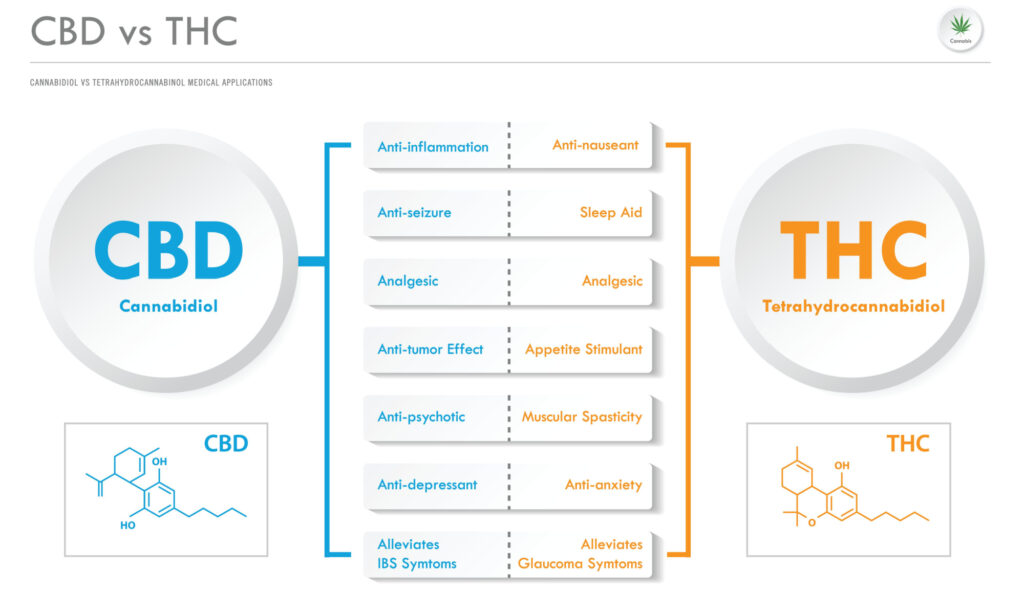
A common misconception is that CBD is the “medical” part of the plant, while THC is purely for recreational use. Clinical evidence shows that both compounds provide substantial therapeutic benefits, and they are often highly effective when prescribed alongside one another.
Medical applications of CBD
Clinical trials and real-world registries have shown that pharmaceutical-grade CBD can be highly effective for patients who have not responded to conventional medications. It is most commonly prescribed to manage:
- Severe anxiety disorders
- Treatment-resistant epilepsy (such as Dravet and Lennox-Gastaut syndromes)
- Insomnia and sleep disturbances
- Inflammatory conditions
Medical applications of THC
THC is an active component in several cannabis-based medicinal products (CBMPs) and offers highly targeted relief for specific physical ailments. Doctors frequently prescribe THC-based therapies to treat:
- Chronic pain that has failed to respond to first-line painkillers
- Chemotherapy-induced nausea and vomiting
- Muscle spasticity associated with multiple sclerosis (often treated with a combined THC and CBD medication)
Emerging research suggests that combining THC and CBD can modify and enhance their respective effects. CBD has been shown to dampen some of the adverse psychotropic effects of THC, allowing patients to tolerate higher, more effective doses of their medication.
Understanding the UK legal status
The legal landscape for these two compounds reflects their differing effects on the body.
CBD is not classified as a controlled substance in the UK, provided it is extracted from industrial hemp and contains strictly regulated, trace amounts of THC. This allows pure CBD products to be legally sold as food supplements and wellness items.
THC, conversely, is heavily regulated. Under the Misuse of Drugs Act 1971, THC is a controlled drug, making it illegal to possess, supply, or produce without specific authorisation. However, a significant change in the law in November 2018 made it legal for specialist doctors on the General Medical Council (GMC) register to prescribe unlicensed cannabis-based medicinal products containing THC. These prescriptions are reserved for patients who have an unmet medical need after trying licensed, standard treatments.
Potential side effects to keep in mind
Like all prescription medications, cannabis-based treatments carry the potential for side effects. Your experience will depend on the specific formulation (CBD, THC, or a blend), your individual metabolism, and the prescribed dosage.
According to clinical data from medical cannabis registries, potential side effects can include:
- Very common: Drowsiness, fatigue, changes in appetite, and mild nausea.
- Common: Dry mouth, blurred vision, sleep disturbances, or slight irritability.
- Uncommon: Fainting, changes in blood pressure, or abdominal pain.
Working closely with a healthcare professional ensures your dosage is carefully managed, drastically reducing the likelihood of experiencing severe adverse effects.
Frequently Asked Questions (FAQ)
Will medical cannabis show up on a drug test?
Yes, if your prescribed medication contains THC, it can be detected in urine, saliva, and blood tests. THC has a long half-life and can remain in your system for up to 30 days depending on your metabolism and dosage. While pure CBD does not show up on drug tests, trace amounts of THC found in some lower-quality CBD products occasionally trigger a positive result.
Can I buy medical-grade THC oil?
You cannot legally purchase THC oil over the counter in the UK. THC-containing products are only accessible via a valid prescription from a specialist doctor for a qualifying medical condition. Any other supply or possession is strictly prohibited by law.
Do I have to choose between CBD and THC?
No. In many cases, patients are prescribed medications that utilise a specific ratio of both CBD and THC. Your prescribing clinician will determine the ideal balance of cannabinoids based on your specific symptoms, medical history, and treatment goals.
Take the next step with Kingsley Muti Pharmacy
Navigating medical cannabis treatments requires expert guidance, absolute discretion, and professional care. If you are living with a chronic condition and conventional treatments have proven unsuccessful, cannabis-based medicinal products could provide a vital alternative for managing your symptoms.
At Kingsley Muti Pharmacy, the Isle of Man’s leading independent pharmacy, we specialise in dispensing medical cannabis provisions securely and efficiently. We are dedicated to supporting patients through every step of their treatment journey.
Are you ready to explore your treatment options? Contact Kingsley Muti Pharmacy today to find out if you are eligible for a medical cannabis consultation and take control of your health.